Norton Holiday Report 2026: 1 in 6 Americans Fell Victim to Online Shopping Scams
PR Newswire
TEMPE, Ariz., Nov. 5, 2026
Survey finds 35% of Americans bought from a suspected scammer because the deal was too good to pass up, while AI shopping assistants steer more shoppers to unfamiliar retailers
TEMPE, Ariz., Nov. 5, 2026 /PRNewswire/ -- According to the 2026 Norton Insights Report: Holiday Scams, nearly half of Americans (48%) are more worried about online scams this holiday season than last. And for good reason: 30% of Americans say they have been targeted by a scam while holiday shopping online, and more than half of them (54%) fell for it.
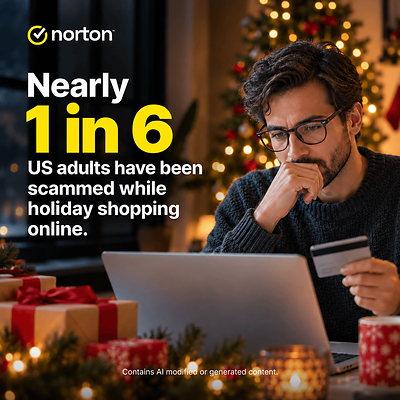
Key findings:
- Nearly 1 in 6 US adults (16%) have been scammed while holiday shopping online. Among Gen Z, that number rises to 25%.
- 88% of shopping scam victims lost money, with an average loss of $394.
- 30% of Americans say they take more risks shopping online during the holidays than the rest of the year.
- 35% have bought from a website or seller they thought might be a scam because the deal was too good to pass up.
- 40% see more scam ads on social media than last year.
- 48% say the amount of scam and AI-generated content online has made them more hesitant to shop online this season.
Americans willing to gamble safety for deals
Nearly three in four Americans (72%) say they're swayed by deals during the holiday season, even though 45% suspect those deals might be scams. Of those surveyed, 65% would buy from a website they'd never heard of if the price is right, and 36% would risk money on a purchase from a seller they suspect is a scam.
"Scammers are counting on holiday shoppers being rushed, distracted and afraid of missing out," said Leyla Bilge, Global Head of Scam Research for Norton. "Imagine seeing a designer handbag advertised for 70% off. The website looks real, the deal ends in minutes, and something tells you it might be a scam. But what if it's legitimate? That moment of hesitation is exactly what scammers exploit. They create a sense of urgency so the fear of missing a bargain outweighs the fear of losing money."
Social media is the No. 1 source of holiday shopping scams, Gen Z hit hardest
Among US holiday scam victims, 47% say they were scammed on a social platform with the top holiday scams being online shopping scams (32%).
One in four Gen Z Americans (25%) has been scammed while holiday shopping online, five times more than Baby Boomers (5%). Gen Z is also the most likely to take more risks during the holidays (45%) and to have bought from a seller they suspected was a scam (49%). They know the risk: 57% of Gen Z are more concerned about scams this year than last.
Fake online stores are surging in 2026
As the 2026 holiday shopping season gets underway, fake online stores are proliferating at an alarming rate. New data from Gen Threat Labs reveals a 129% increase in fake shop activity compared to the start of last year's holiday season, with the Gen family of brands, including Norton, blocking nearly 25 million attempted visits to fraudulent shopping sites in the last month alone. The latest surge builds on an already troubling trend, with fake e-shops doubling during the 2025 holiday season compared to 2024. And with increasingly sophisticated AI tools making it easier than ever for scammers to create convincing storefronts, holiday shoppers face a growing threat.
- Fake holiday shops are multiplying. The number of fake store domains blocked roughly doubled from the 2024 holiday quarter (260,000) to 2025 (526,000).
- Fake shops outlast the holidays. Across the most-blocked fake shops in 14 countries, nearly two in three (64%) were still being blocked six months after first detection. In the US, fake shops stayed in operation for about seven months.
- US shoppers are targeted. Gen protected more than 416,000 Americans from visiting fake shops.
AI is changing online shopping habits, but not always protecting people from scams
Americans are increasingly using AI for their holiday shopping despite not having full confidence in the tools to help them avoid malicious sites. While 83% say they would use an AI
assistant to shop, only 42% of them are confident it would recognize and avoid a fraudulent
website. Sixty-three percent have used an AI shopping assistant or agent, and 42% plan to use a tool like ChatGPT for holiday shopping this year.
Gen Threat Labs is already seeing examples of AI assistants failing to recognize scams. In one case, a shopper asked an AI assistant to find affordable alternatives to a designer leather jacket. Among the recommendations was a $279 jacket from a fraudulent online store, presented alongside legitimate retailers without any warning. The example highlights a growing risk: shoppers may trust a recommendation because it comes from AI, even when the website behind it cannot be trusted.
To help address the AI scam issue, Norton Genie is designed to help people identify scams and make safer decisions online. Powered by AI and Norton's decades of Cyber Safety expertise, Genie helps people assess suspicious messages, links and websites, offering an added layer of protection as they navigate an increasingly AI-driven shopping experience.
How to avoid holiday shopping scams
- Check the website before you buy. Look for misspelled URLs, search the store name with "scam" or "reviews," and use tools to help flag malicious sites.
- Skip the ad and go straight to the retailer. Type the store's address into your browser or open its official app instead of clicking a social ad.
- Use AI-powered scam protection. Genie inside Norton 360 helps spot scam links, fake websites and malicious downloads before they do damage.
- Double-check what AI recommends. Vet any retailer an AI assistant suggests before you confirm a purchase.
- Pay with protection. Use a credit card or a payment service with buyer protection. Avoid sellers who ask for bank transfers, gift cards or cryptocurrency.
- Track packages at the source. Check delivery status in the retailer's or carrier's app, not through links in texts or emails.
The full 2026 Norton Insights Report: Holiday Scams is available at us.norton.com/blog/research/holiday-scams-insights-report-2026.
Methodology
The US survey was conducted online by Dynata on behalf of Gen from Sept. 10 to Sept. 21, 2026, among 1,000 US adults ages 18 and older. Data are weighted by age, gender and region to be nationally representative.
About Norton, part of Gen
Norton is a leader in Cyber Safety and empowers millions of individuals and families with award-winning protection for their devices, online privacy, and identity. Norton is part of Gen (NASDAQ: GEN), a global company dedicated to powering Digital Freedom with a family of trusted consumer brands that help people protect and take control of their digital and financial lives. As AI reshapes how people discover, decide and transact, Gen is building the security and trust layer to empower people and their agents to navigate digital life more safely. Gen empowers nearly 500 million users in more than 150 countries through its products and services that span cybersecurity, online privacy, identity protection and financial wellness. Learn more at Norton.com and GenDigital.com.
Media Contact:
Brittany Posey
press@GenDigital.com

 View original content to download multimedia:https://www.prnewswire.com/news-releases/norton-holiday-report-2026-1-in-6-americans-fell-victim-to-online-shopping-scams-302930803.html
SOURCE Norton
