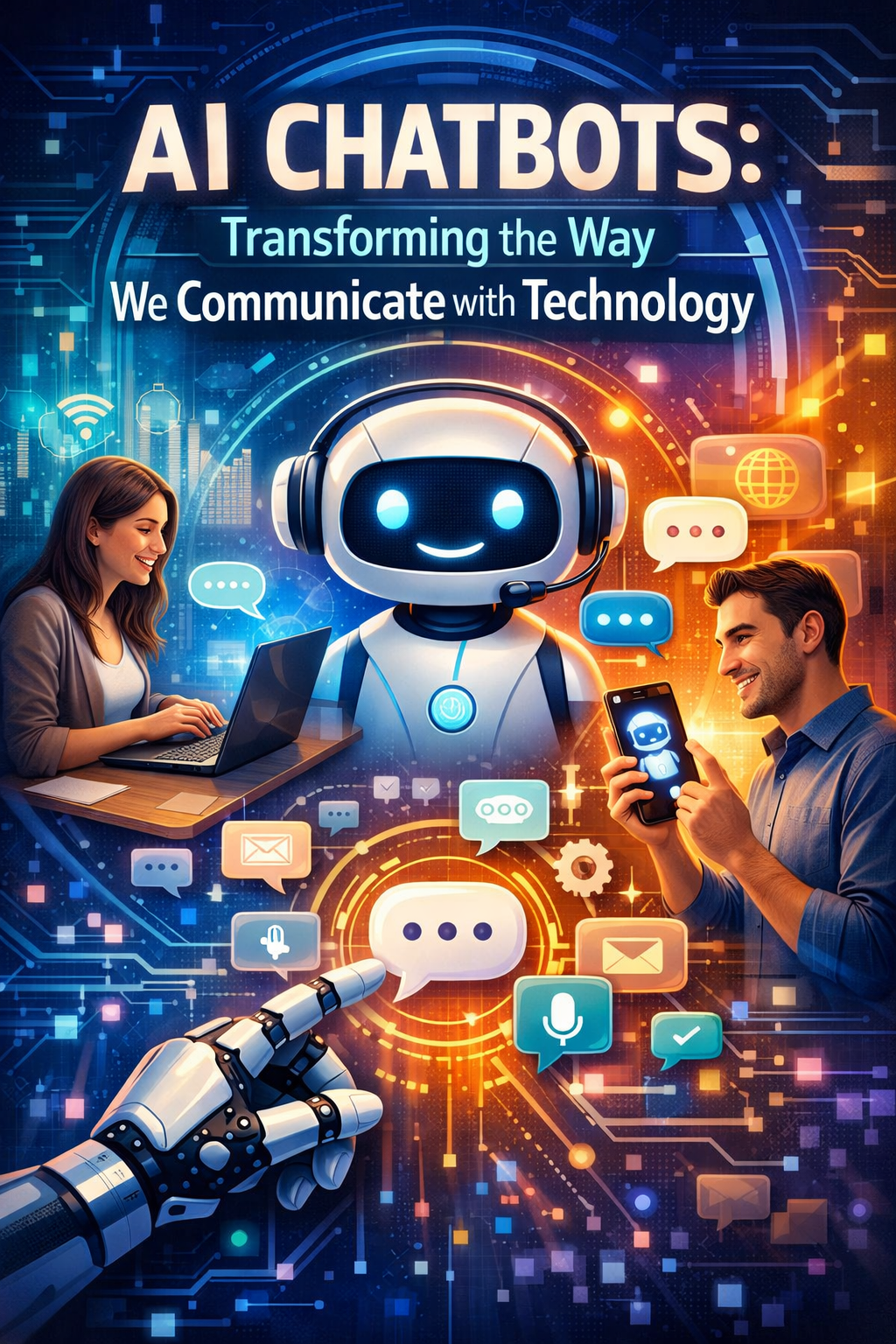
Artificial Intelligence (AI) has revolutionized many aspects of modern life, and one of the most impactful innovations is the AI chatbot. These intelligent virtual assistants are no longer just novelties; they are now integral tools for businesses, healthcare providers, educational platforms, and everyday consumers. AI chatbots combine natural language processing, machine learning, and predictive analytics to engage users, answer queries, and perform tasks in a human-like manner. In this article, we will explore AI chatbots in detail, including their types, benefits, challenges, use cases, and future developments. We’ll also address frequently asked questions to provide a comprehensive understanding of how AI chatbots are shaping digital interactions.
What Are AI Chatbots?
At their core, AI chatbots are software programs designed to simulate conversation with humans. Unlike traditional chatbots that follow scripted paths and pre-defined responses, AI chatbots leverage advanced technologies such as:
-
Natural Language Processing (NLP) – Allows chatbots to understand and interpret human language.
-
Machine Learning (ML) – Enables chatbots to learn from interactions and improve over time.
-
Sentiment Analysis – Helps detect user emotions and adjust responses accordingly.
These capabilities allow AI chatbots to deliver dynamic, personalized, and context-aware conversations that feel closer to human interactions.
Types of AI Chatbots
AI chatbots can be broadly categorized based on their complexity and capabilities:
1. Rule-Based Chatbots
Rule-based chatbots operate using predefined rules and decision trees. They follow scripts and can handle basic tasks like answering FAQs or providing standard information. While they are reliable for simple queries, they struggle with understanding complex or ambiguous inputs.
2. AI-Powered Chatbots
These chatbots use machine learning algorithms to understand user intent. They can recognize patterns, analyze context, and respond in a more human-like manner. AI-powered chatbots continually improve through feedback and training data, allowing them to handle increasingly complex conversations.
3. Hybrid Chatbots
Hybrid chatbots combine rule-based systems with AI capabilities. They can efficiently manage common questions using scripts while leveraging AI for more complicated or nuanced interactions. This approach is particularly effective in customer service scenarios, where consistency and personalization are both essential.
How AI Chatbots Work
Understanding the workflow behind AI chatbots can help clarify why they are so effective. Here’s a simplified overview of how they function:
-
Input Interpretation – The chatbot receives user input, either via text or voice.
-
Natural Language Processing – The system analyzes the input to understand intent, keywords, and sentiment.
-
Decision Making – Based on the understanding, the chatbot selects the most appropriate response from its database or generates a response using AI models.
-
Response Generation – The chatbot delivers a response, maintaining context and personalization.
-
Learning and Improvement – AI chatbots learn from every interaction, improving future responses and accuracy.
Benefits of AI Chatbots
AI chatbots offer multiple advantages for businesses, individuals, and organizations across industries:
1. 24/7 Availability
Unlike human agents, AI chatbots never sleep. They provide round-the-clock assistance, ensuring users always receive timely support.
2. Cost Efficiency
Employing AI chatbots reduces the need for large customer support teams, lowering operational costs while maintaining high-quality service.
3. Scalability
AI chatbots can simultaneously handle thousands of conversations, making them highly scalable solutions for businesses with growing customer bases.
4. Personalized Experiences
By analyzing user data and behavior, AI chatbots can provide customized responses, product recommendations, and targeted information.
5. Faster Response Times
AI chatbots can respond instantly to queries, minimizing wait times and enhancing the overall user experience.
6. Data Collection and Insights
Chatbots can gather valuable user data, analyze patterns, and generate insights that help businesses improve services and products.
Use Cases of AI Chatbots
AI chatbots have penetrated various sectors, transforming how organizations interact with users. Some notable use cases include:
1. Customer Support
AI chatbots are widely used in customer service to answer FAQs, troubleshoot issues, and route complex inquiries to human agents.
2. E-Commerce
Online retailers use AI chatbots to guide customers through product selection, offer recommendations, and assist with purchases.
3. Healthcare
In healthcare, chatbots provide appointment scheduling, symptom checking, patient follow-ups, and mental health support.
4. Banking and Finance
Financial institutions leverage chatbots for balance inquiries, transaction histories, fraud alerts, and financial advice.
5. Education
Educational platforms use chatbots to support students, answer curriculum questions, and provide learning resources.
6. Travel and Hospitality
Travel agencies and hotels implement AI chatbots for booking assistance, travel recommendations, and real-time customer support.
Challenges of AI Chatbots
Despite their numerous advantages, AI chatbots face challenges that must be addressed for effective deployment:
1. Misunderstanding Complex Queries
Chatbots may struggle with ambiguous or multi-layered questions, sometimes resulting in incorrect or irrelevant responses.
2. Limited Emotional Intelligence
While sentiment analysis allows some recognition of emotions, chatbots cannot replicate deep human empathy.
3. Privacy Concerns
Handling sensitive user data requires strong data security measures. Mismanagement can lead to breaches and trust issues.
4. Integration with Existing Systems
Incorporating chatbots into legacy systems can be technically challenging, requiring careful planning and implementation.
5. Continuous Training Required
AI chatbots need ongoing updates and training to remain accurate, especially in dynamic industries like finance or healthcare.
Future Trends in AI Chatbots
The evolution of AI chatbots is ongoing, and several trends are shaping their future:
1. Advanced Conversational AI
Future chatbots will be capable of deeper contextual understanding, more human-like dialogue, and multi-turn conversations that closely mimic human interactions.
2. Voice-Enabled Chatbots
Voice technology is expected to become more widespread, allowing users to interact naturally with AI chatbots using speech.
3. Multilingual Support
AI chatbots will increasingly provide seamless multilingual communication, breaking language barriers in global business and services.
4. Emotional Intelligence
Advancements in AI may allow chatbots to better detect user emotions, offering more empathetic and context-aware responses.
5. Hyper-Personalization
By analyzing behavioral patterns and historical data, chatbots will deliver highly personalized content, recommendations, and guidance.
6. Integration with IoT
AI chatbots will integrate more with IoT devices, allowing users to control smart homes, connected appliances, and vehicles via conversational interfaces.
Best Practices for Implementing AI Chatbots
For businesses looking to deploy AI chatbots successfully, the following best practices are essential:
-
Define Objectives Clearly – Determine what tasks the chatbot should handle, whether customer support, lead generation, or internal assistance.
-
Understand the Audience – Tailor the chatbot’s language, tone, and functionality to the target users.
-
Combine Human and AI Support – Use AI for routine tasks while providing human agents for complex queries.
-
Continuous Training and Updates – Regularly review conversations and update AI models to improve accuracy.
-
Focus on User Experience – Ensure the chatbot is intuitive, responsive, and capable of handling errors gracefully.
-
Maintain Privacy and Security – Protect user data with encryption, compliance with regulations (like GDPR), and secure storage.
FAQs About AI Chatbots
1. What is the difference between a chatbot and an AI chatbot?
A traditional chatbot follows scripted responses and cannot adapt to new questions. AI chatbots, powered by machine learning, can understand context, learn from interactions, and provide more human-like responses.
2. Are AI chatbots safe to use?
Yes, AI chatbots are generally safe when designed with proper data security measures. Businesses must comply with privacy laws and ensure sensitive data is encrypted and securely stored.
3. Can AI chatbots replace human employees?
While AI chatbots handle repetitive and routine tasks, they cannot fully replace human judgment, creativity, or empathy. They are best used to augment human efforts rather than replace them entirely.
4. How much does it cost to implement an AI chatbot?
Costs vary based on complexity, integration requirements, and features. Simple chatbots may cost a few hundred dollars, while advanced AI chatbots with custom development can cost thousands or more.
5. Can AI chatbots learn from conversations?
Yes. AI chatbots use machine learning to analyze interactions, understand patterns, and improve responses over time. This continuous learning makes them more effective and personalized.
6. Which industries benefit most from AI chatbots?
Customer service, e-commerce, healthcare, finance, education, and travel are some of the industries that benefit most, but AI chatbots are versatile and can be applied across nearly any sector.
Conclusion
AI chatbots are no longer futuristic concepts; they are essential tools driving modern digital communication. By combining natural language processing, machine learning, and advanced analytics, AI chatbots improve user engagement, streamline processes, and provide personalized experiences.
While challenges such as emotional intelligence, privacy concerns, and system integration exist, proper planning, continuous learning, and hybrid human-AI strategies can ensure effective deployment.
The future of AI chatbots is bright, with trends pointing toward hyper-personalization, emotional awareness, voice integration, and seamless multilingual support. Businesses and users alike stand to benefit from this intelligent technology, which is reshaping how we interact with information, services, and one another.
For companies seeking efficiency and improved user satisfaction, AI chatbots are not just a tool—they are a transformative strategy for the digital age.